What Is Sunscreen Pilling?
You have done your whole skincare routine. You apply your sunscreen last, start to blend it in, and then you notice it. Instead of sinking smoothly into your skin, the product starts to ball up and roll around. Little flakes and clumps appear, and no amount of rubbing makes them go away. That is sunscreen pilling, and it is one of the most frustrating things that can happen in a morning routine.
Pilling is when a product rubs off the skin in tiny flakes or granules. It can be caused by improper application of your products or a formulation error in either your sunscreen or the skincare products you are using beneath it.
The problem goes beyond just looking bad. When a product balls up or flakes, its absorption and efficacy is reduced. If your sunscreen pills, you are not getting the full amount of sun protection that your sunscreen states. So besides having your skin looking bumpy or flaky, your risk of sunburn, skin cancer, and premature ageing are increased.
This means pilling is not just a cosmetic annoyance. It is a genuine sun protection problem. The good news is that once you understand why it happens, fixing it is straightforward.
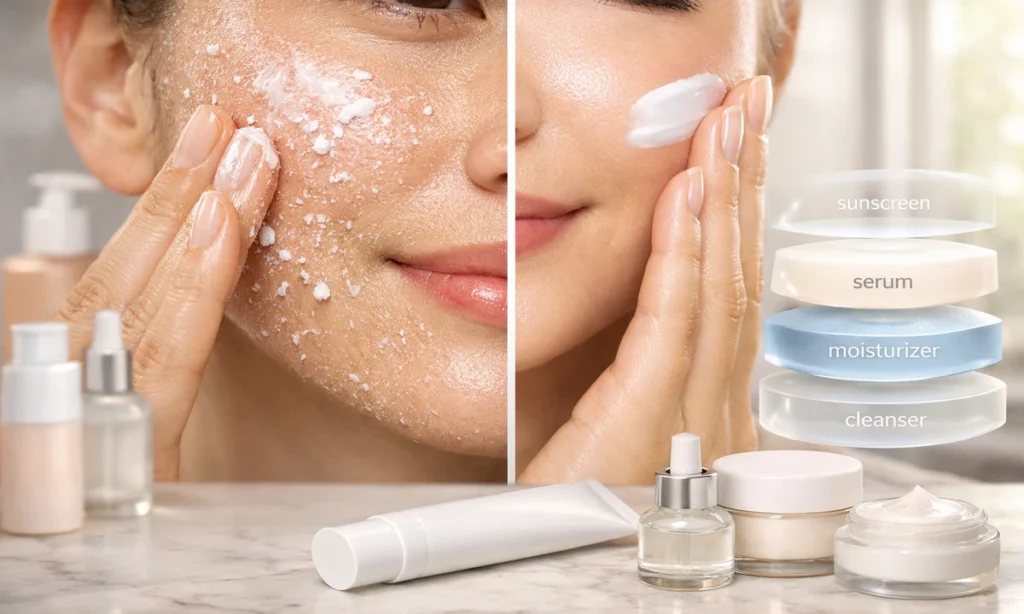
Why Does Sunscreen Pill in the First Place?
Pilling happens for several reasons, and most of them come down to what is underneath your sunscreen and how you apply it. Understanding each cause makes it much easier to solve.
Your Products Are Not Compatible With Each Other
The most common reason sunscreen pills is that it does not get along with what you have already put on your face. Pilling tends to happen when film formers in a product clump up when exposed to an incompatible ingredient, usually a solvent such as water, oil, or silicone.
Think of it like mixing oil and water in a glass. They simply do not blend together. When your sunscreen meets certain ingredients from your moisturiser or serum that are still sitting on the skin’s surface, a similar reaction happens, and instead of blending in, the sunscreen starts to break apart into those annoying little balls.
If pilling is a persistent issue for you, you may want to steer clear of beauty products that contain petrolatum, mineral oil, or waxes. These ingredients can be occlusive or form a film over your skin. The larger molecules in these ingredients prevent the smaller molecules from absorbing into the skin properly, forming the residue that leads to sunscreen pilling.
Silicone Is Often the Hidden Culprit
Silicone is in a huge number of skincare and makeup products, and it is one of the most common causes of pilling. Silicones such as dimethicone, amodimethicone, and cyclomethicone are often included in sunscreen because they create a barrier on the skin’s top layer to protect against environmental stressors such as wind and water. This increases their overall efficacy but can also cause the formula to clump together on your skin.
The problem gets worse when silicone builds up from multiple products. Silicone can accumulate on your skin. You might not see it until you start adding sunscreen, at which point it could start pilling.
If you are using a serum, moisturiser, and primer that all contain silicone, and then you apply a sunscreen that also contains silicone on top, there is simply too much silicone on your skin and it has nowhere to go except to ball up.
Your Sunscreen Type Matters
There are two main types of sunscreen: mineral and chemical. They behave very differently on skin, and this affects how likely they are to pill.
Mineral sunscreens lay on the surface of the skin, whereas chemical formulas are absorbed into the skin. Because mineral sunscreens sit on top as a physical barrier rather than soaking in, they are naturally more prone to disturbing whatever is underneath them when you apply them.
Mineral sunscreens are more prone to pilling than chemical formulations. In dry skin, the sunscreen tends to sit on the desquamated layer rather than rubbing in smoothly, which creates that pilling appearance. When the skin is quite oily, the sunscreen formula, particularly if water-based, does not mix well with the natural facial oils, and again creates a balled-up, uneven application.
This does not mean you should avoid mineral sunscreen. It just means you need to be more careful with the products you layer underneath it.
You Are Rushing
Rushing through your morning routine is one of the most common reasons sunscreen pills, and it is also one of the easiest to fix. The most common mistake is when we rush things, not giving layers enough time to dry. If you are a piller, plan drying time between layers. Apply serum, make tea. Apply moisturiser, brush teeth. This dramatically reduces the incidence of pilling. You may even need to wait a full five to ten minutes until all your skincare products are dry before applying SPF or makeup.
When you apply sunscreen over a moisturiser that is still wet and sitting on the surface of your skin, you are essentially trying to mix two different products together by hand. They will not blend. They will pill.
You Are Using Too Much Product
More product does not mean more protection or better skin. When it comes to pilling, it often means the opposite. If your skincare routine is packed with serums, moisturisers, and primers, your sunscreen might not have enough room to settle in.
Use just enough product, especially for serums. Too much can slow absorption rates and cause the excess to pill on top of the skin. Each layer of product you put on your face needs to be thin enough to actually absorb. When you pile on thick layers, only the bottom portion ever makes contact with your skin. The rest just sits on the surface and becomes a pilling problem waiting to happen.
Dead Skin and Uneven Texture
The condition of your skin itself plays a role. Another reason your sunscreen might be pilling is that there is dirt, dust, dry skin, and oil built up on and in your skin. All of these factors can cause the surface of your skin to be lumpy and not pH balanced.
Dead skin cells create an uneven surface with raised patches and rough texture. When you apply products over this kind of surface, they cannot spread smoothly, and pilling is much more likely to occur.
The Exact Order That Stops Sunscreen Pilling
The single most powerful fix for sunscreen pilling is getting your product order right and following a few simple rules at each step. Here is the exact routine that works.
Step 1: Start With Clean, Dry Skin
This sounds obvious but it is essential. If you put a mineral sunscreen on wet skin, it does not go on. And while chemical sunscreen may blend into wet skin, it is not going to work as well, because if you are applying it to wet skin, that is going to affect the absorption of the chemical sunscreen.
Wash your face, then wait. Pat dry with a clean towel and give your skin at least one minute before you start applying anything. A clean, dry base means every product that follows has the best possible chance of absorbing properly.
Step 2: Exfoliate Regularly (Not Every Day)
This is a background step, not a daily one, but it makes a significant difference. Dead skin cells can contribute to pilling by mixing with skincare products. Regular exfoliation, whether physical or chemical, helps remove these dead skin cells, creating a smoother surface for product application.
Using a gentle chemical exfoliant once or twice a week keeps your skin surface smooth and even, which gives your products a much better base to sit on. Just do not over-exfoliate, as irritated skin creates its own problems.
Step 3: Apply Toner or Essence First (Thinnest Product)
If you use a toner or essence, this goes on first. Essences and toners go on first since they are the lightest, followed by fluid-like serums, then lotions and creams. Sunscreen should always be the last step in your skincare routine prior to applying makeup.
Apply your toner, wait thirty seconds to one minute, and then move on. Do not rush.
Step 4: Apply Serum in a Thin Layer and Wait
Serums are where a lot of pilling problems begin, because many serums contain film-forming ingredients that create a surface layer on the skin. Apply a small amount of serum, press it in gently with your palms rather than rubbing it across your face, and then wait.
Allow each layer about ten minutes to absorb before applying sunscreen as the final step of their routine. If you cannot wait that long, give it at least two to three minutes. Your skin should feel dry to the touch before you move forward.
Step 5: Apply Moisturiser in a Thin Layer and Wait Again
The moisturiser layer is the one most commonly blamed for causing sunscreen to pill. If you are layering products, consider using a lightweight serum rather than a thick cream when pilling is a problem.
Apply a small amount of moisturiser, press it into your skin gently, and then wait. Give your moisturiser at least five minutes to fully sink into your skin before moving to the next step. This is particularly important when using heavier or occlusive products like silicone-based serums or moisturisers.
The key rule here: your moisturiser must feel completely dry and absorbed before you pick up the sunscreen. If you press a clean finger to your cheek and it comes away feeling slick or damp, you need to wait longer.
Step 6: Apply Sunscreen Last, Using a Patting Motion
Sunscreen is always the final skincare step before makeup. Apply a generous amount, but not excessively thick. Then, instead of rubbing it across your face with your fingertips in a wiping motion, use a pressing and patting technique.
Dab product in different spots on the skin before rubbing them in to even distribution and minimise friction. When applying foundation over sunscreen, try using a beauty blender or makeup sponge. This can be a game changer in reducing pilling with makeup application. The action of pushing makeup into skin rather than rubbing up the layers underneath with brushes or fingers reduces the risk of pilling considerably.
Rubbing creates friction that physically disturbs the layers underneath. Pressing the product in is much gentler and keeps everything in place.
Additional Fixes Worth Knowing
Reduce the Total Number of Products
Sometimes the answer is simply to use fewer things. Every product you add to your routine is another opportunity for incompatibility. Reducing the number of products you use can decrease the chances of pilling. Each additional layer increases the potential for interaction between products, especially if they contain conflicting ingredients.
If you are using a cleanser, toner, vitamin C serum, hyaluronic acid serum, eye cream, moisturiser, and then sunscreen, that is a lot of layers. Consider whether all of them are truly necessary, or whether some can be cut.
Check the Ingredient Lists
Products that are rich in silicones, talc, mica, and iron oxide have a tendency to pill more than others that do not. These ingredients can also be found in cosmetics, which is why any beauty product can potentially pill.
If you keep having problems with one specific product, look at its ingredient list and check for silicones, xanthan gum, carbomer, petrolatum, or mineral oil. Try swapping that product for a lighter, water-based alternative.
Switch to a Lighter Sunscreen Formula
Not all sunscreens are equally prone to pilling. Opt for lightweight, non-comedogenic sunscreens with a gel or fluid texture. Some sunscreens contain ingredients such as silicones or thickening agents that are more prone to pilling.
A thinner, more fluid sunscreen formula has a much easier time sitting smoothly over other products. If your current sunscreen consistently pills regardless of what you do, it may simply be the wrong formula for your routine, and trying a different product is the simplest solution of all.
Also Read: What UV 3+ means in Australia